EXPO YELLO 2026 Tour de France
Expo Yello race desk Stage 20 / July 25 Daily Tour de France reports
Latest stage reports Results and jersey impact Tactics and decisive moves New dispatches after the finish

The explainer · 30-second version

New to the Tour? It is four races happening at once.

Overall time

The yellow jersey is simple and brutal: add each rider's stage times, penalties, and bonuses. Lowest total wins.

Specialist contests

Sprinters chase green, climbers chase polka dots, younger contenders chase white, and teams chase their own classification.

Team labor

Only one rider may stand on the podium, but seven helpers can decide whether that rider survives wind, climbs, crashes, and hunger.

Race control

Commissaires enforce time limits, feeding zones, support rules, sprint lines, and penalties. The circus has a traffic code.

Illustrated guide

Ten images, ten pieces of the race

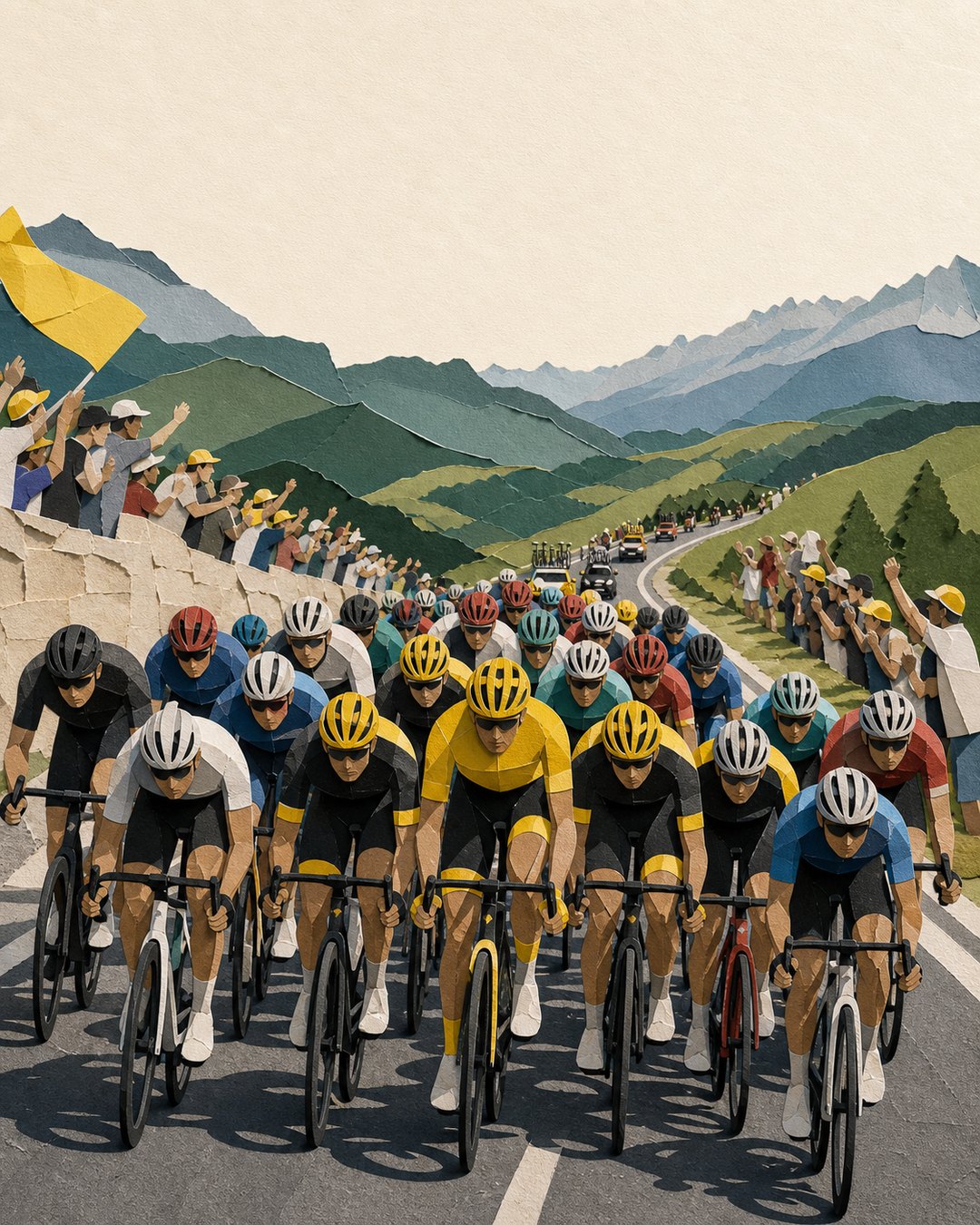
Peloton riding through mountains with a protected yellow jersey leader.
Yellow jersey

General classification is a running clock.

The Tour winner is not the rider with the most stage wins. It is the rider with the lowest total time after every stage, with time bonuses and penalties included. Teammates protect that clock as if it were cargo.
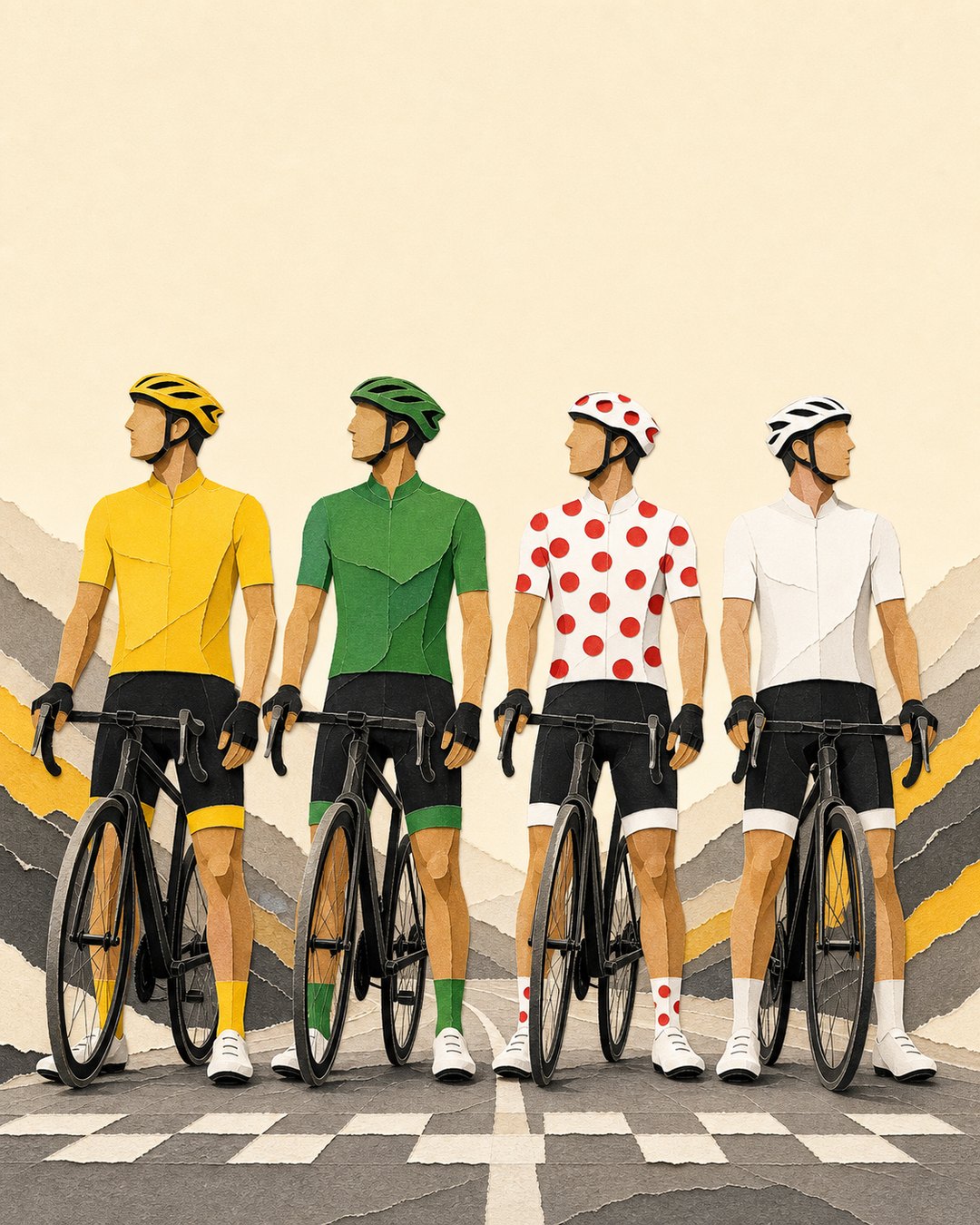
Four generic cyclists in yellow, green, polka-dot, and white jerseys.
Jerseys

Every jersey tells you what race a rider is winning.

Yellow leads overall time. Green leads the points classification. White with red dots leads the mountains. White is the best young rider, open in 2026 to riders born after January 1, 2001.
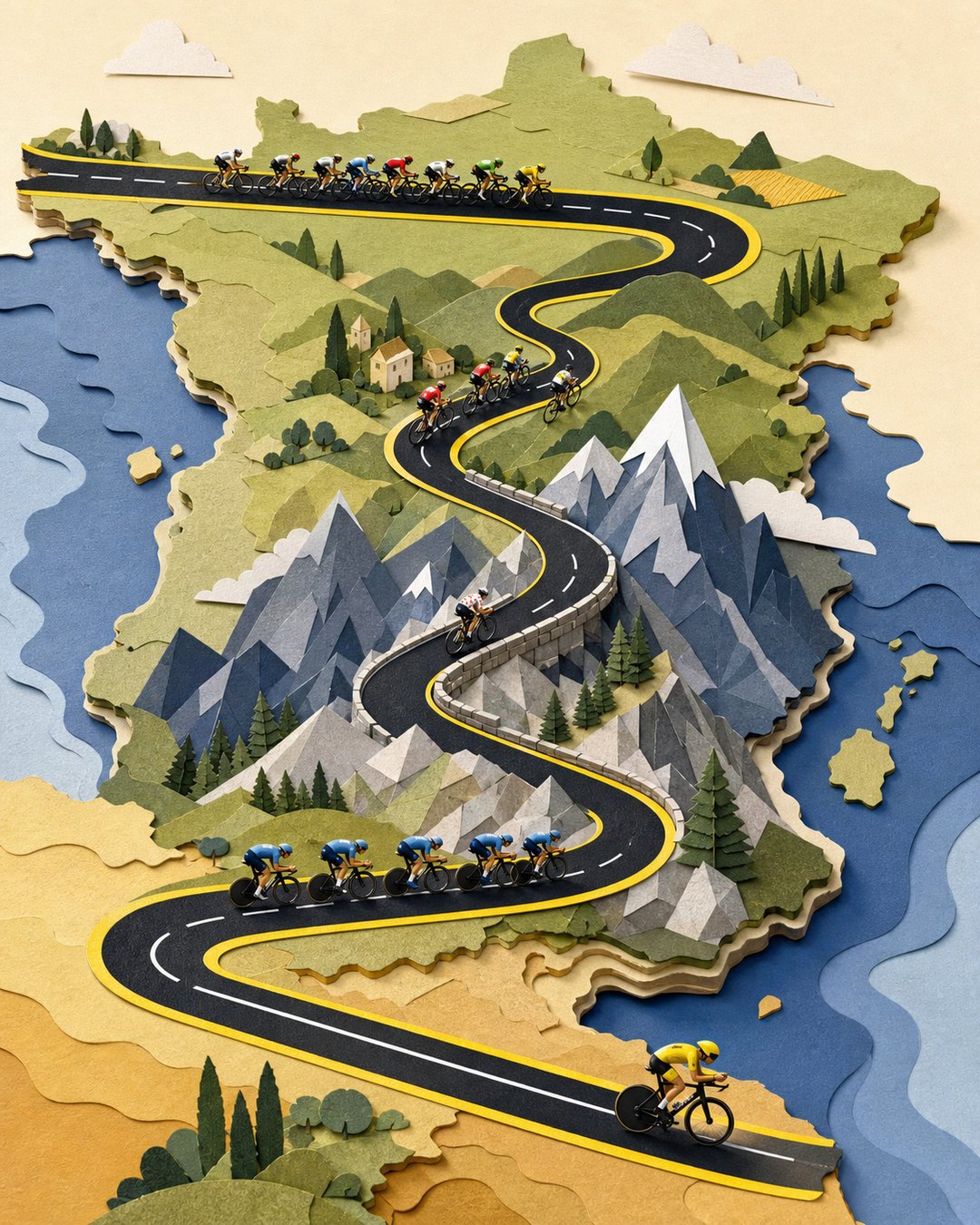
Layered route showing flat roads, hills, mountains, and time trials.
Route

The route keeps changing the problem.

The 2026 route has 7 flat stages, 4 hilly stages, 8 mountain stages, 1 team time trial, 1 individual time trial, and 2 rest days. A rider who looks invincible on a sprint day can be in survival mode in the Alps.
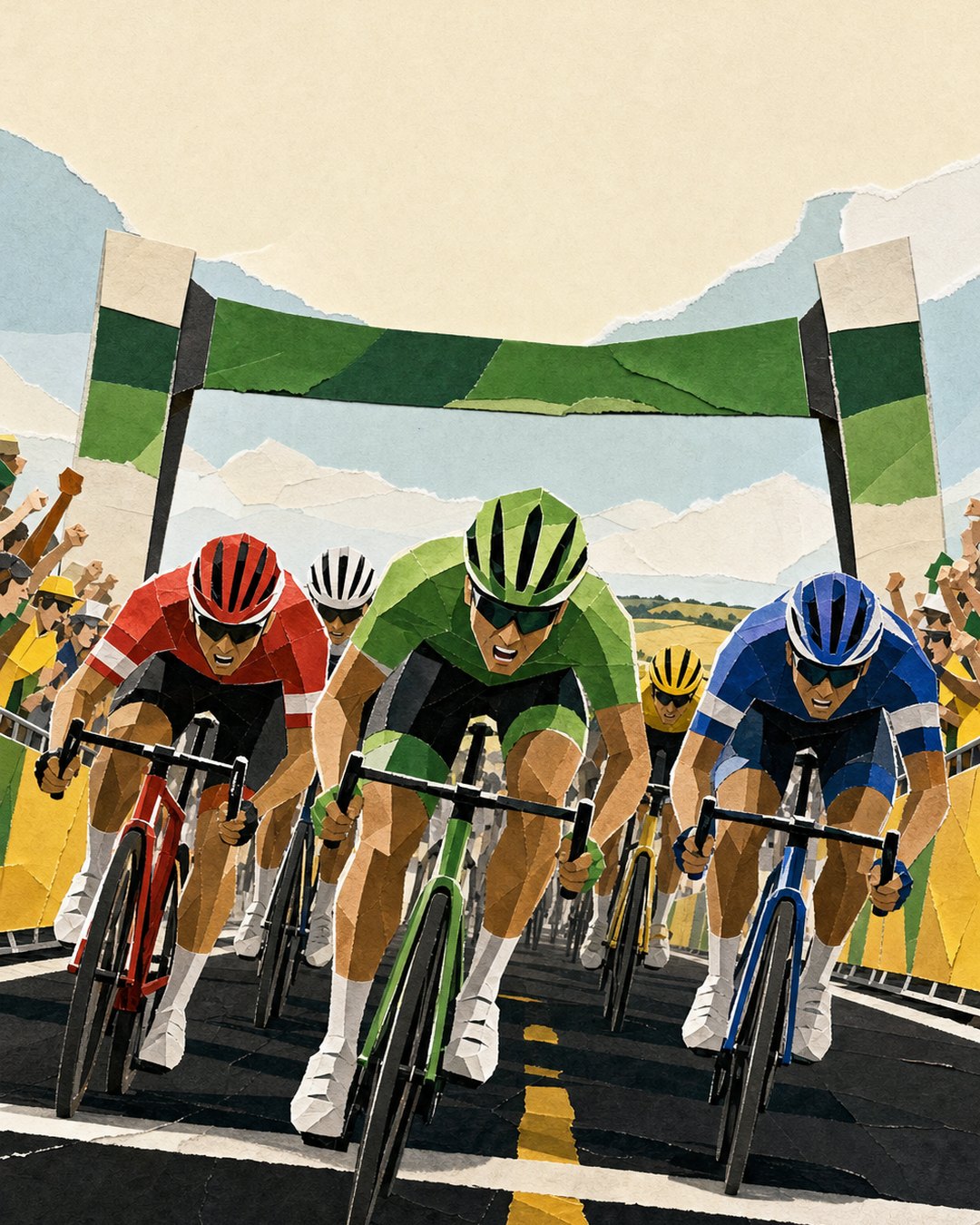
Sprinters lunging for an intermediate sprint line under a green arch.
Green jersey

Sprint points reward speed and consistency.

Flat stage finishes pay the most points, while intermediate sprints offer a mid-stage prize. That is why sprint teams may chase all day even when they do not care about the overall win.
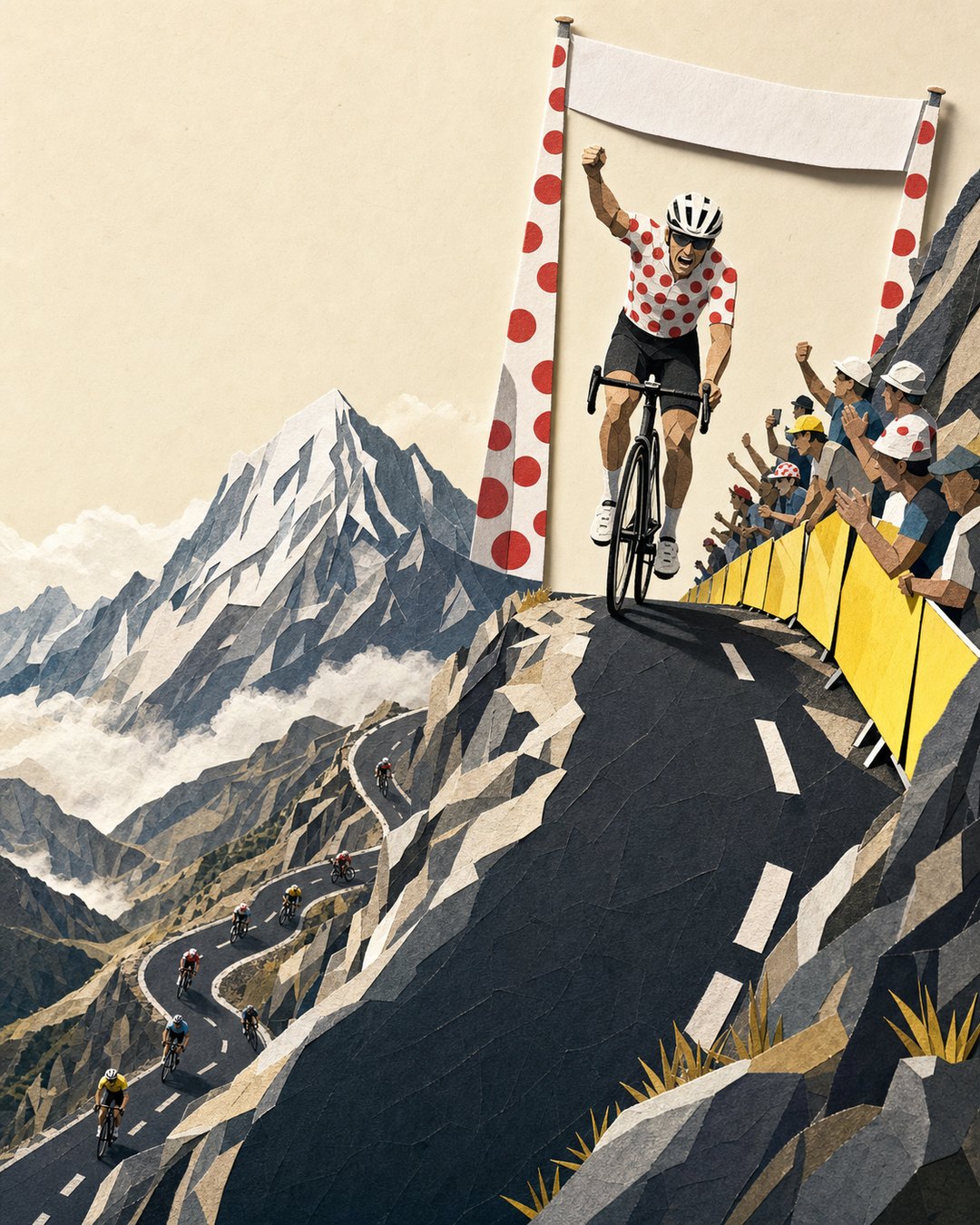
Polka-dot climber cresting a steep alpine summit.
Polka dots

Mountain points are paid at the top.

Climbs are ranked from category 4 up to hors categorie. The harder the climb, the deeper and richer the points scale. Attacking before a summit can be worth more than waiting for the finish.
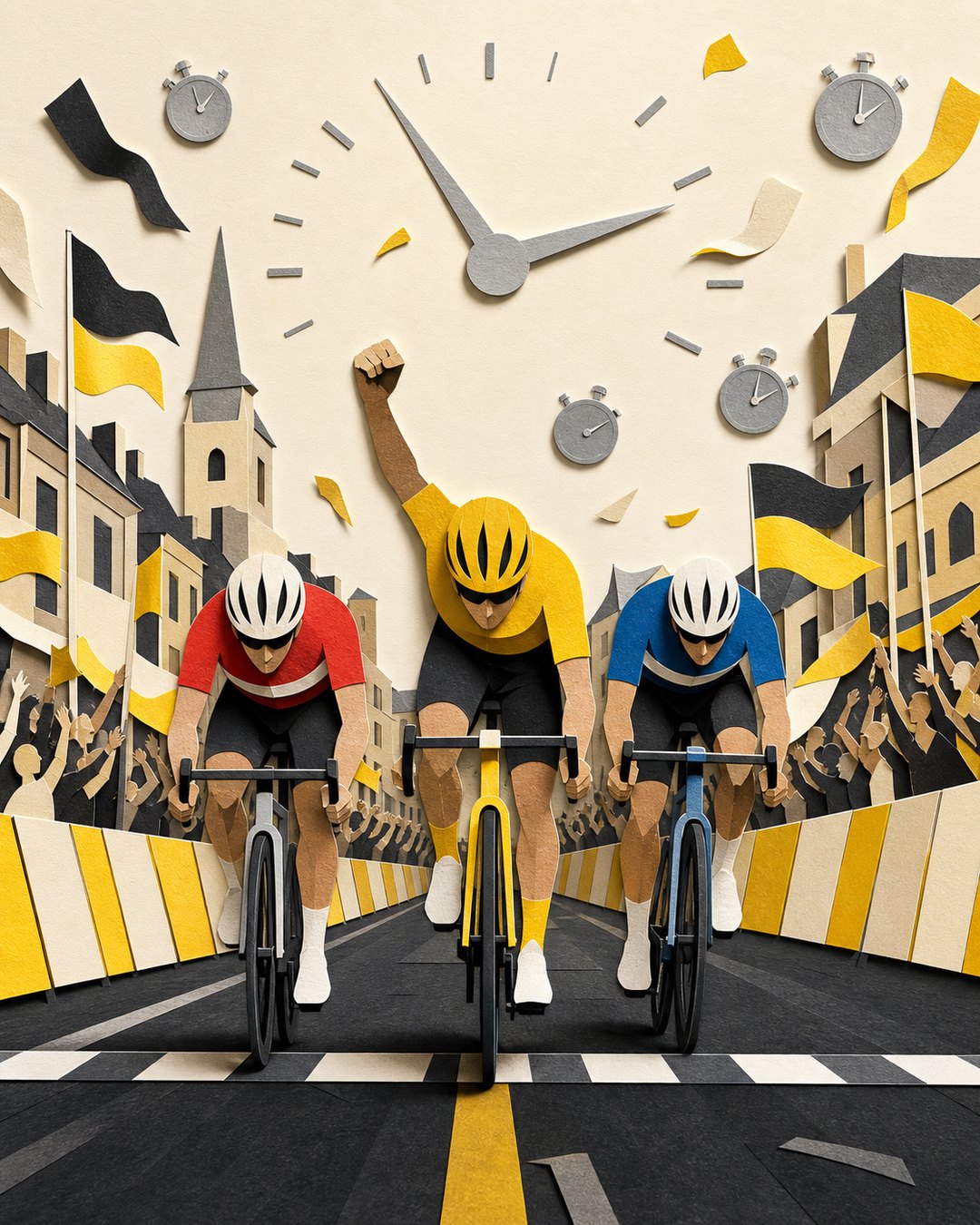
Finish sprint with clock motifs above the riders.
Bonus seconds

Stage placings can rewrite the overall race.

On road stages, the first three riders at the finish receive 10, 6, and 4 seconds. That sounds tiny until a three-week Tour is separated by less time than a coffee order.
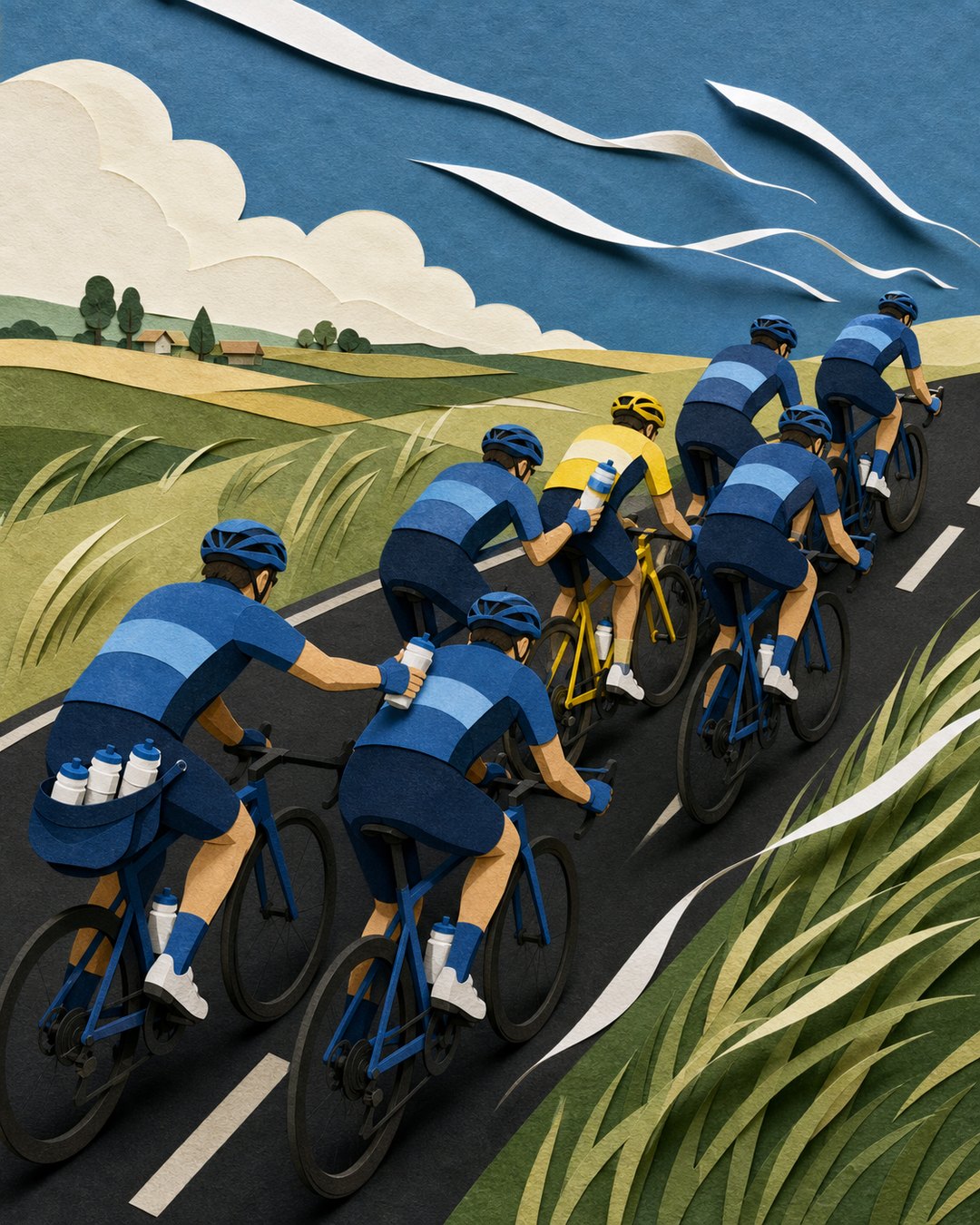
Blue teammates shielding a leader from crosswinds.
Team dynamics

A leader wins by spending other riders' energy.

Domestiques fetch bottles, block wind, chase attacks, set mountain tempo, guide positioning, and sometimes sacrifice their own result. The strongest team can make the race feel smaller for its leader.
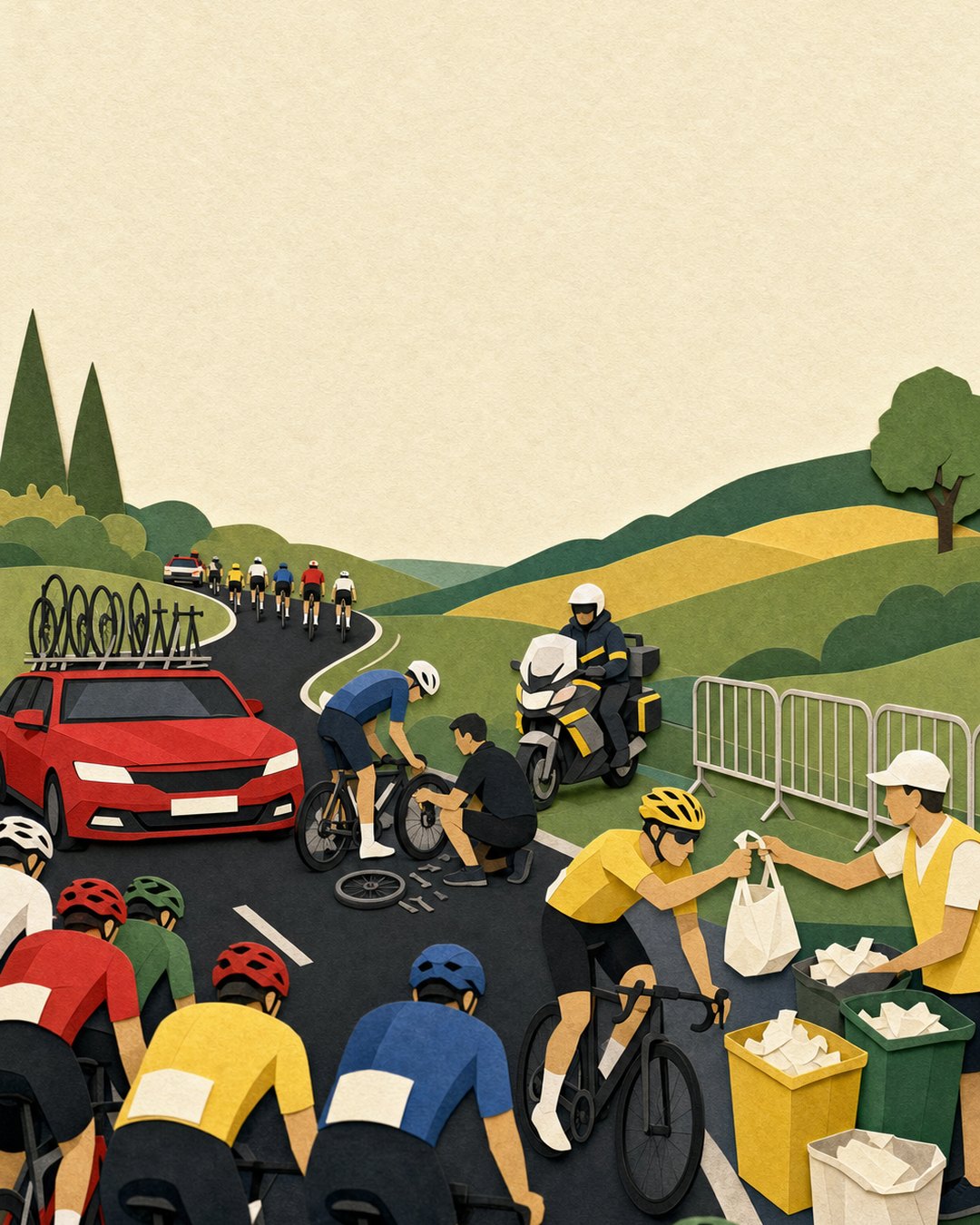
Feed zone and team-car support scene with riders and mechanics.
Support

Help is legal, but only in the right way.

Riders can exchange food and drink freely, but wheels and bikes can only be exchanged within the same team. Technical assistance must happen behind the peloton, on the right side of the road, while stationary.
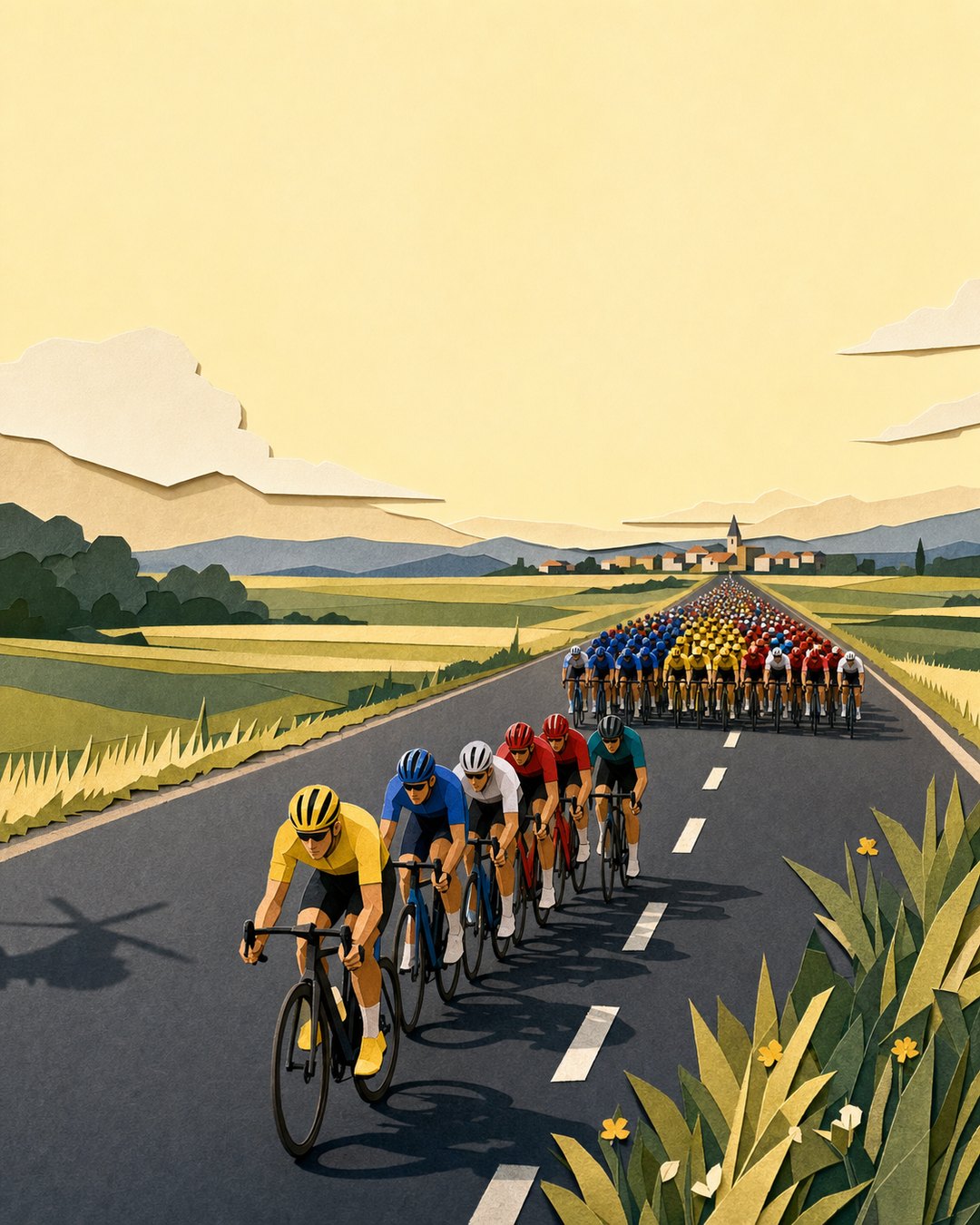
Small breakaway group ahead of a distant peloton chasing across open fields.
Breakaway

A breakaway is a math problem with legs.

The front group needs cooperation and enough time. The peloton needs discipline, horsepower, and a reason to chase. Watch the gap, the wind, the teams represented, and the distance left.
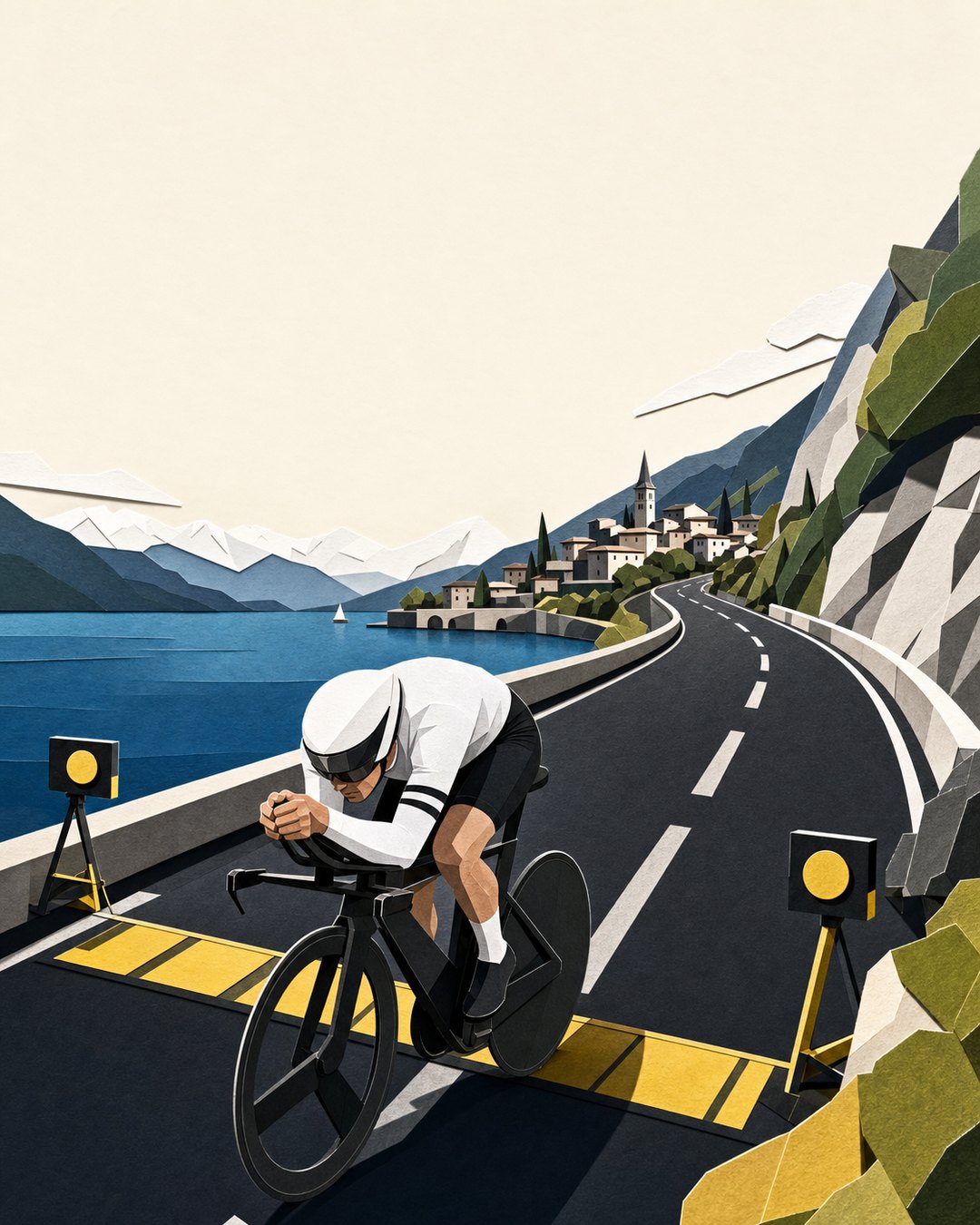
Solo time trial rider racing beside an alpine lake against timing markers.
Against the clock

Time trials remove the hiding places.

In the stage 16 individual time trial, riders start in reverse GC order. If a rider catches another, they cannot pace or draft; the passed rider must drop back.
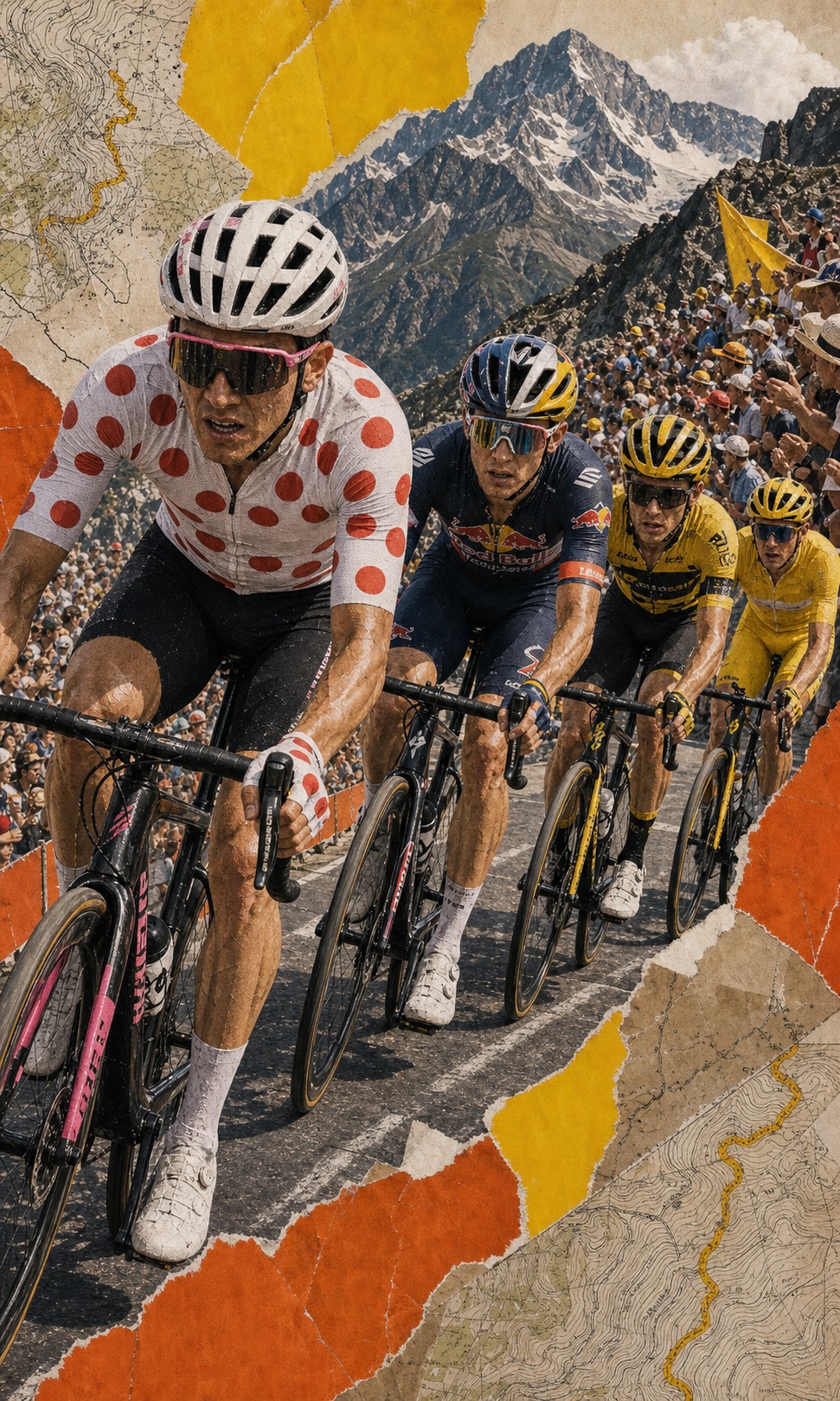
The scorebook

Points, climbs, time, and classifications

2026 points classification headline scales
Moment Top points Paid places What it favors
Flat finish, coefficient 1 70-50-40 First 18 Pure sprinters and lead-out trains
Slightly rolling finish 50-30-20 First 15 Sprinters who can survive hills
Rolling finish 30-25-22 First 15 Puncheurs and durable fast finishers
Hard stage or time trial 20-17-15 First 15 GC riders, climbers, and specialists
Intermediate sprint 25-20-16 First 15 Green-jersey hunters before the finish

Ties in the points classification are broken by stage wins, then intermediate sprint wins, then general classification rank.

Team dynamics

Why a team sport crowns one rider

GC leader

The protected contender. Their job is to avoid lost time, survive hard days, and attack when the course suits them.

Domestique

The helper. They carry bottles, close gaps, shepherd the leader, and burn energy so the leader does not have to.

Road captain

The on-bike organizer. They read wind, road furniture, crashes, and panic before the race radio can solve it.

Lead-out train

A sprint convoy. Riders take high-speed turns on the front so the sprinter launches from the cleanest possible position.

Climbing lieutenant

The last helper in the mountains. Their steady tempo can discourage attacks or set up one decisive acceleration.

Breakaway card

A rider sent up the road to chase a stage, force rivals to work, or become a bridge for the leader later.

1Protect position before wind and road furniture.
2Let harmless breaks go; chase dangerous ones.
3Use helpers early so leaders spend watts late.
4Trade stage ambition against jersey ambition.

Race-day rhythm

What happens between roll-out and the line

  1. Sign-on and neutral start

    Riders sign in, roll through town at controlled speed, then the race director releases the official start.

  2. Early attacks

    Breakaway hopefuls try to form the day's front group while the peloton decides whether the move is acceptable.

  3. Intermediate contests

    Green-jersey points, KOM points, and feed-zone logistics give the middle of the stage its own stakes.

  4. Final hour

    GC teams fight for safety, sprint teams assemble lead-outs, and breakaways either commit or start bargaining with fatigue.

  5. Red kite to finish

    The final kilometre marker begins the last phase: sprint launch, summit duel, solo survival, or time-trial emptying-out.

Glossary

Words commentators assume you already know

Peloton

The main bunch. Drafting inside it saves energy, but position is everything.

Grupetto

A group of riders, often sprinters on mountain days, working together to finish inside the time limit.

Flamme rouge

The red kite marking one kilometre to go, unless the finish setup requires a different marker.

Virtual yellow

A rider ahead on the road who, if the current time gaps held, would lead the general classification.

Commissaire

A race official who enforces rules, validates results, and applies penalties.

Broom wagon

The last official vehicle. Riders behind it are effectively outside the race convoy.

Sources

Grounded in the 2026 official material

Facts were checked against the official 2026 route page, sporting stakes page, and 2026 rules and regulations PDF.

Fan-made educational page. Not affiliated with Tour de France, A.S.O., or the UCI.