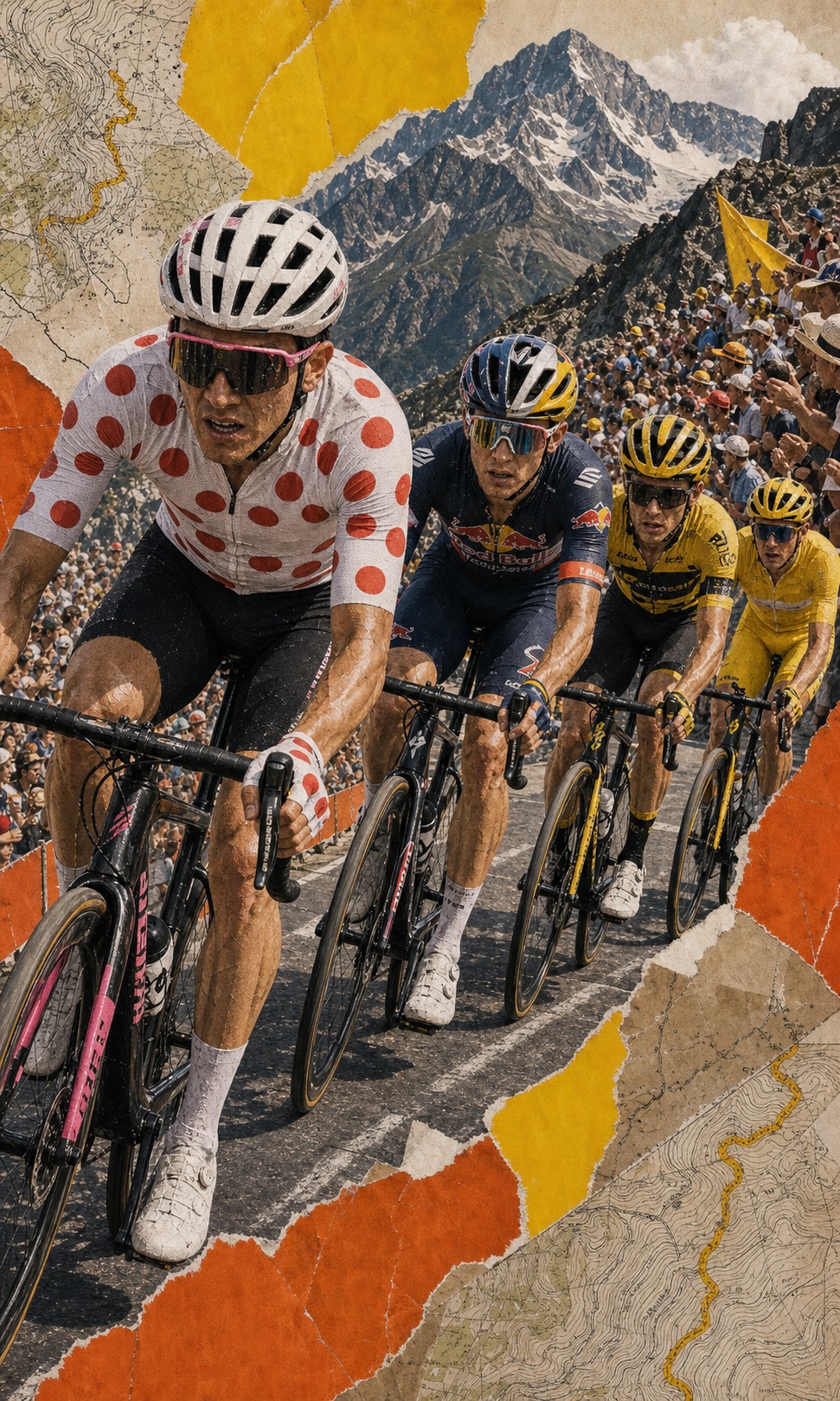
July 25, 2026 · Stage 20 · Le Bourg d'Oisans to Alpe d'Huez
Stage 20 looked like the Tour's last chance to break yellow, but the race spent its last mountain day settling almost everything else. Richard Carapaz started the afternoon hunting the polka dots, finished it with the stage, and did both jobs on terrain brutal enough to make almost every tactical plan feel temporary. Sepp Kuss climbed like the strongest man in the break, then crashed twice on the run-in from the Col de Sarenne and watched the day leave him. Behind them, Tadej Pogačar chose not to answer Remco Evenepoel's last acceleration because his more important assignment was clear: get Isaac del Toro onto the Paris podium.
The official Tour roadbook had already framed the day as a final stress test, not a ceremonial transfer. Four major climbs, 5,450 meters of elevation gain, and a back-door approach to Alpe d'Huez via the Col de Sarenne made this a harder mountain stage than Friday's spectacle on the famous hairpins. Official coverage showed the race responding accordingly. The break only settled on the ascent to the Glandon, and when it did, it included enough serious climbers to keep the entire afternoon live: Kuss, Carapaz, Jai Hindley, Juan Ayuso, Matteo Jorgenson, Ben Healy, Tobias Foss, Paul Armirail, and several more riders with either stage ambitions or classification work to finish.
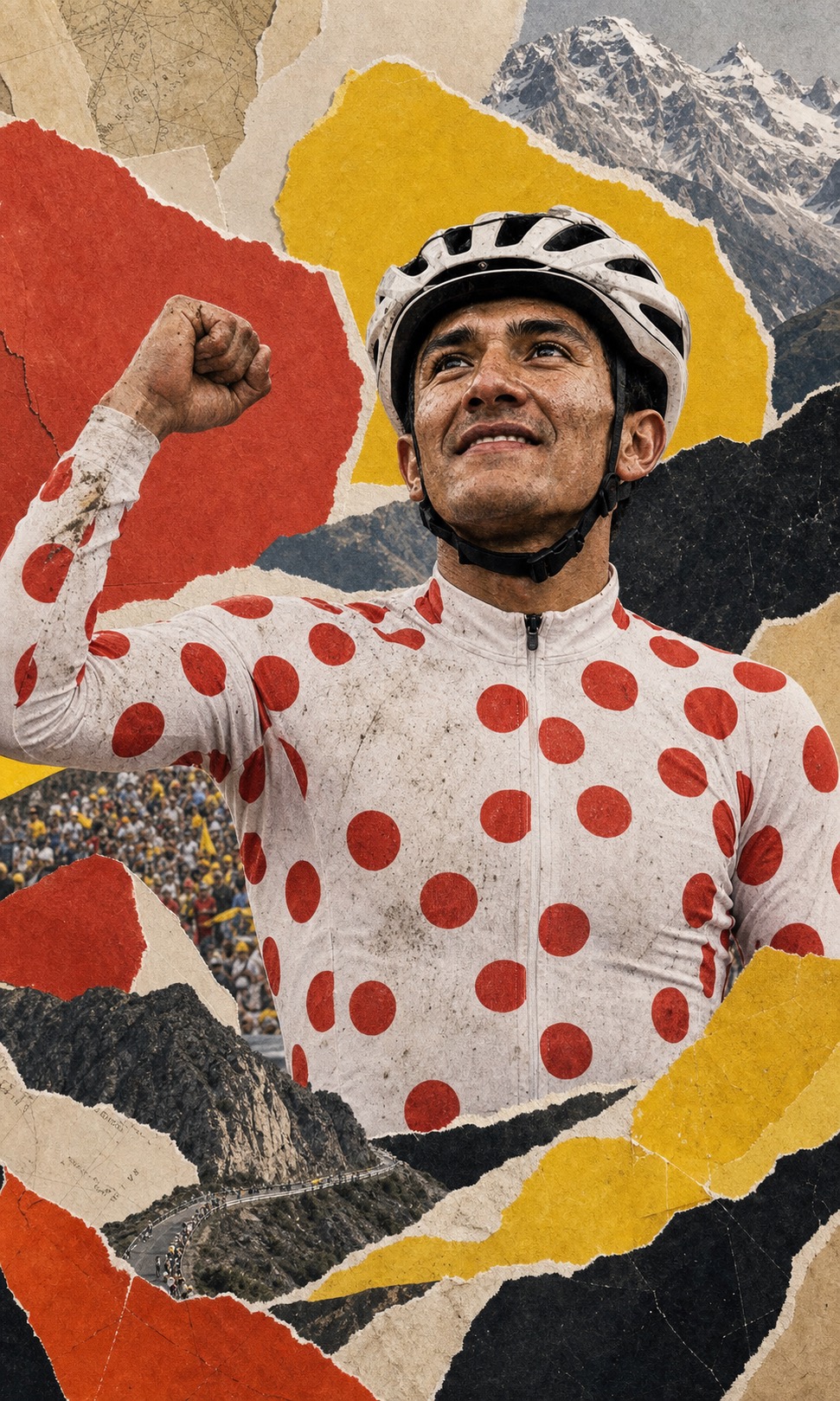
Carapaz chased polka first and let the stage come with it
Carapaz was explicit afterward that he began the stage thinking only about the mountains jersey, and the official stage film backed him up. He attacked late on the Croix de Fer to take 20 more KOM points, then kept hoovering up the decisive summits on the Télégraphe and the Galibier until the climbers' competition was effectively his. In the valley, Mads Pedersen executed the parallel jersey mission, jumping from the peloton to take the intermediate sprint in Saint-Julien-Mont-Denis and all but locking green before the race turned savage again in the high Alps.
That early work mattered because the break never relaxed into a simple stage lottery. By the time the leaders crested the Galibier at 2,642 meters, the front had already been stripped down to the riders who could still survive a second summit finish in two days. Carapaz, Kuss, Hindley, and Ayuso were the last four still meaningfully in the game there, while Pogačar had already started reducing the GC group behind. Stage 20 stopped being about volume and became about who could keep finding one more acceleration after the last sensible move had already been spent.
Kuss cracked the race open, then the descent cracked the script
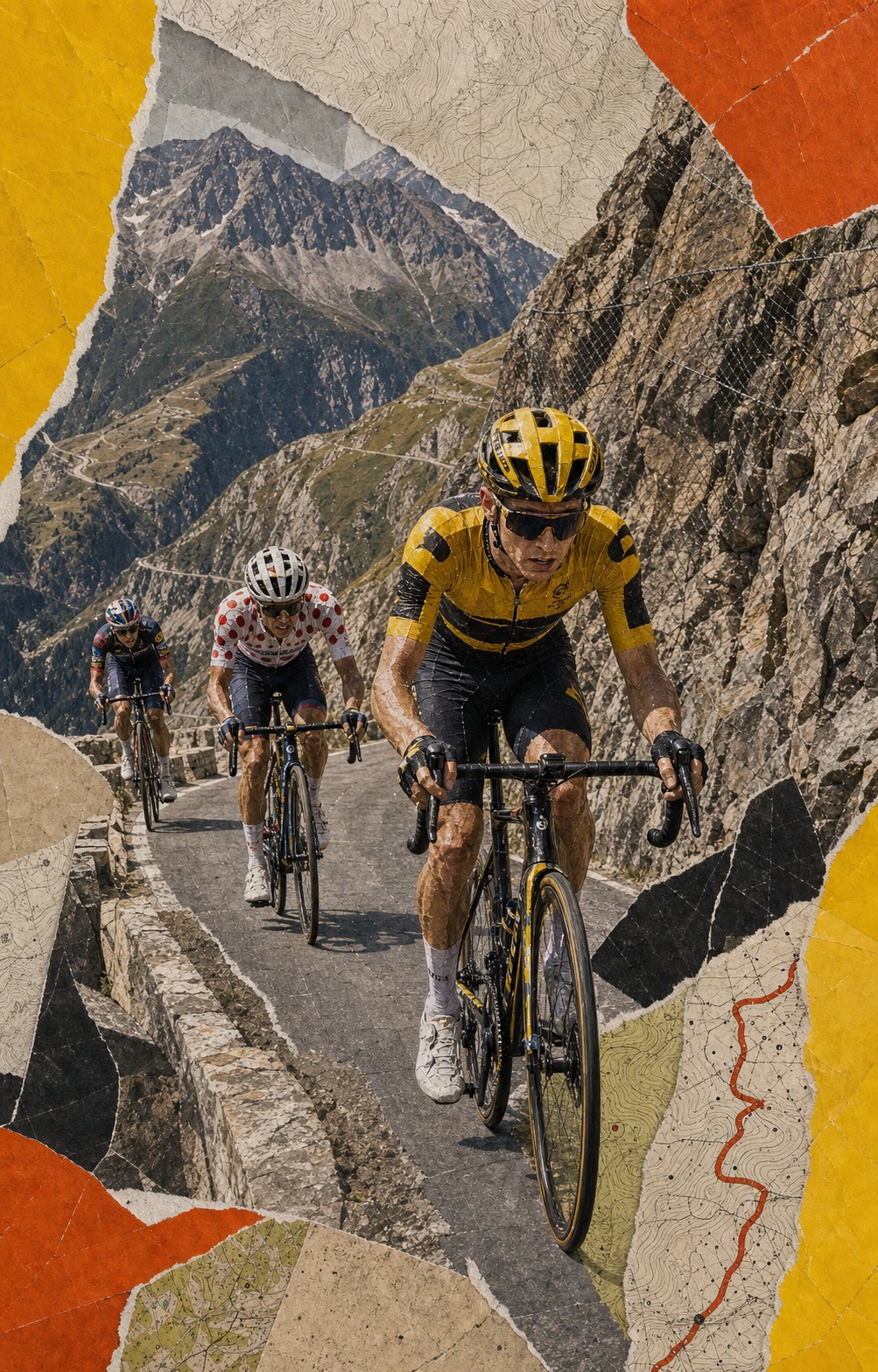
The decisive move came on the Col de Sarenne. Official race reporting said Kuss finally distanced Carapaz and Hindley with three kilometers left to the summit and reached the top with an 18-second advantage. That should have been the launch point for a famous solo. Instead it became the setup for the stage's ugliest twist. Cyclingnews reported that Kuss first hit a curb exiting a dark tunnel and then, two kilometers later, lost control again on the technical descent, only saved from going over the edge by the barrier and safety net.
Official Tour coverage measured the turning point more coldly: the gap dropped from 18 seconds at the summit to 12, and Carapaz passed Kuss with six kilometers remaining. From there the Ecuadorian still had to finish the job. He carried the pressure of a charging Evenepoel from behind and Kuss trying to salvage the podium of the stage, but he held 26 seconds over the Belgian and 31 over the American at the line in 4:59:39. Carapaz said afterward that there was a moment when he "couldn't believe" what was happening. That made sense. The stage was won partly by persistence, partly by opportunism, and entirely by still having enough legs left to make the luck useful.
Pogačar chose Del Toro over a late chase, and the podium order hardened
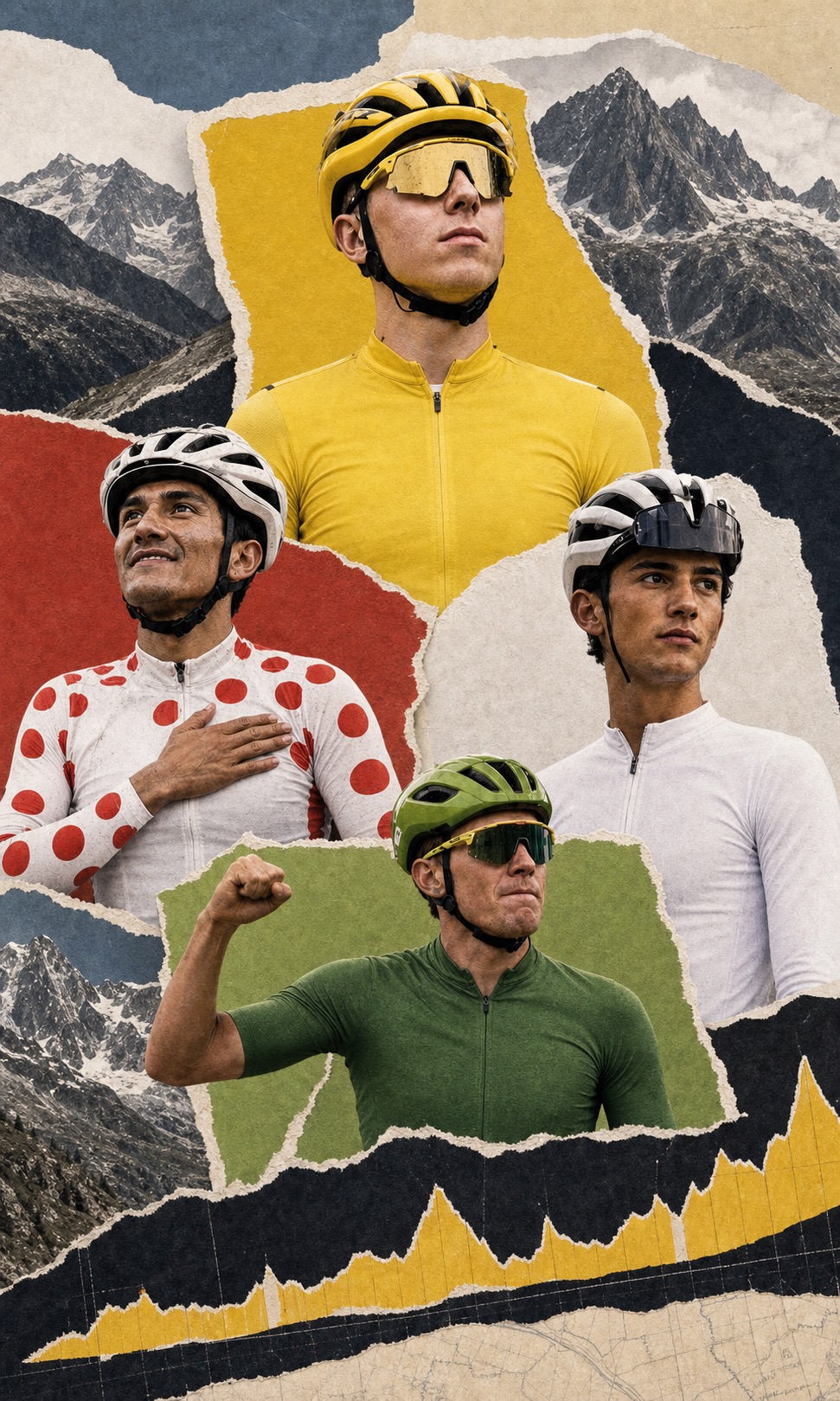
The yellow-jersey race did not explode because Pogačar refused to treat it like a vanity contest. The official stage film says Evenepoel attacked with three kilometers to go, but Pogačar stayed with Del Toro after the Mexican accelerated clear of Paul Seixas on the Sarenne and needed help converting that gap into something safe. They crossed the line arm in arm at 1:05, while Seixas came in at 2:55. That did more than preserve Del Toro's third place. It turned a fragile white-jersey fight into a much cleaner margin and left the 22-year-old heading toward Paris with the podium and youth classification effectively secured.
The stage still mattered for yellow, just not in a dramatic way. Evenepoel's second place and bonus seconds shaved a little time, but nowhere near enough to disturb the race's center of gravity. Pogačar now only has to survive the altered Paris finale to claim what looks like a fifth Tour de France, while Evenepoel can focus on keeping second rather than imagining something larger. The real movement on Saturday happened elsewhere: Carapaz pushed the polka dots to an unassailable 156 points, Pedersen locked green beyond realistic reach, and Del Toro finally got a mountain stage where the yellow jersey visibly worked for him instead of the other way around.
Sunday is no longer a full Thoiry-to-Paris transfer
The other major change on Saturday came off the road. The Tour announced at 15:53 local time that Stage 21 has been shortened from 133 kilometers to 89 because internal security forces are being redeployed to respond to wildfires, particularly in the Gironde region. The official update says the riders will still parade in Thoiry, then travel directly to Paris, with the official start now scheduled from the finish line at 5:50 p.m. before two extra Champs-Élysées laps and the Montmartre circuit.
That does not change the headline hierarchy. Carapaz has already taken what he came for, Pedersen only needs to stay upright, Del Toro only needs to protect what Pogačar helped him secure, and Pogačar now sits one managed evening away from closing the Tour with yellow intact. Stage 20 was the last day built to invite disaster. It delivered some, just not to the rider still wearing the race's most important jersey.
Sources
- Official Tour de France Stage 20 route and timing page
- Official Tour de France Stage 20 summary
- Official Tour de France Stage 20 rankings
- Official Tour de France post-stage quote from Richard Carapaz
- Official Tour de France final-stage route change bulletin
- The Guardian Stage 20 live coverage
- Cyclingnews Stage 20 race report
- Cyclingnews on Sepp Kuss crashing away the stage