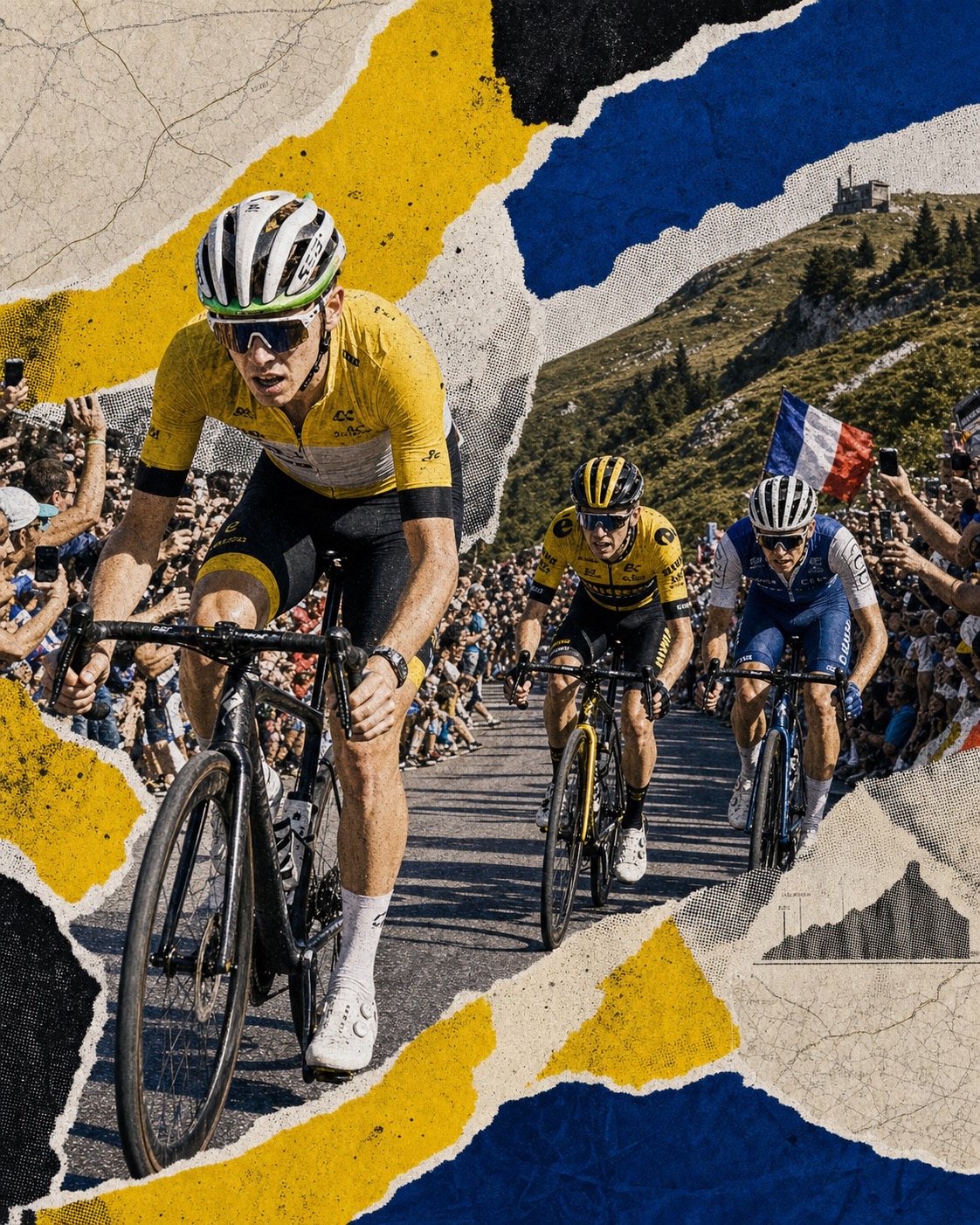
July 18, 2026 · Stage 14 · Mulhouse to Le Markstein Fellering
The route told everyone where to look. Stage 14 stacked the Grand Ballon, the Ballon d'Alsace, and the new Tour arrival via the Col du Haag into 155.3 kilometers of Vosges attrition, then waited for the race's strongest rider to decide how much pain to add. Pogačar waited until the road pitched to its cruelest gradient, attacked 1.5 kilometers from the summit of the Haag, and turned a hard mountain stage into another clean demonstration of control.
He reached Le Markstein in 4:00:07, 38 seconds ahead of teammate Isaac del Toro and Seixas, with Jonas Vingegaard next at 44 seconds and Remco Evenepoel at 48. The gap was large enough to push Pogačar's lead in yellow out to 4:30 over Vingegaard, but the subtler reshuffle may matter just as much for the week ahead: Seixas moved to fourth overall at 5:19, just 15 seconds off Evenepoel's podium place, and took the white jersey by three seconds over Juan Ayuso.
The Vosges stage did exactly what it promised
This was never a transition day disguised as a mountain stage. The official stage page listed 3,800 meters of climbing and an expected arrival of 17:24 local time, and the race still came in only a few minutes after that despite all the hesitation that happens before a final-selection climb. The early hours stripped teams down to essentials, lifted the pace across each major ascent, and left the favorites increasingly exposed before the Col du Haag ever began.
The breakaway story mattered, especially for the mountains competition, but not because it was ever likely to stay clear all the way. Valentin Paret-Peintre and the other stage hunters forced the race to keep spending matches, while UAE Team Emirates-XRG were content to let the day breathe as long as the yellow jersey stayed protected. By the time the favorites hit the final ascent, the stage had narrowed from a broad tactical puzzle into the simpler question that has defined most of this Tour: who can still follow Pogačar when he wants the stage himself?
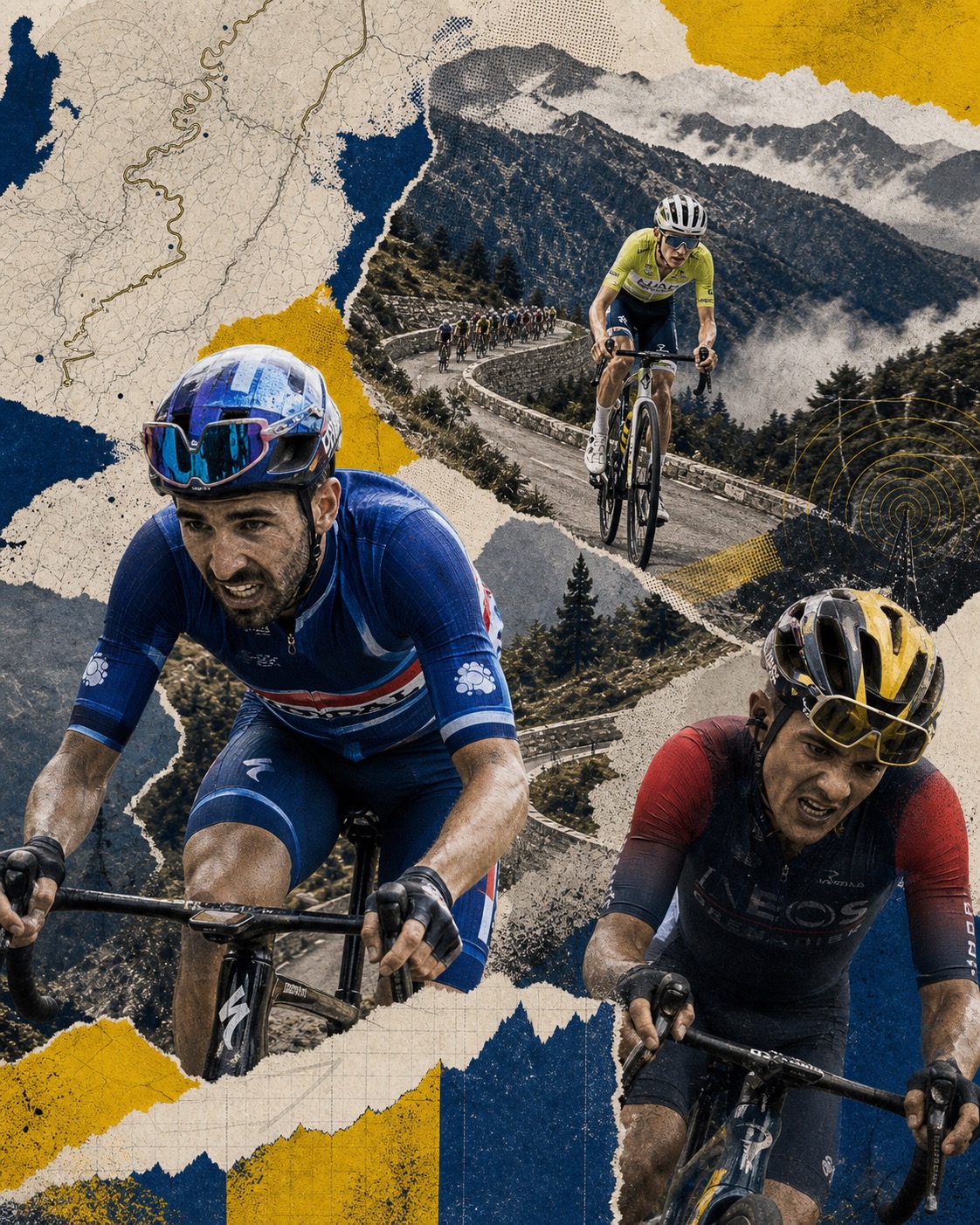
Pogačar attacked once, and that was enough
Guardian live coverage and Reuters' post-stage report align on the decisive moment: Pogačar accelerated about 1.5 to 1.6 kilometers from the top of the Haag, roughly 7.5 kilometers from the finish, and none of the other contenders could close the first split. There was no messy sequence of counterpunches, no hesitation followed by a regrouping. Vingegaard, Seixas, Lipowitz, Ayuso, and Evenepoel all had to decide immediately whether they were racing for the stage or for damage control, and by then the answer had already tilted toward the second option.
The official Tour reaction page captured the atmosphere as much as the tactic. Pogačar said he had "never seen something like this," a fair description of the crowd density on the final climb as much as his own level. Once clear, he did not overcomplicate the descent and run-in. The margin held steady, Del Toro salvaged second for UAE, and Seixas made the strongest final impression among the riders chasing the yellow jersey rather than wearing it.

White changes hands, green stays put, and Pidcock pays for Friday
The yellow jersey story is now brutally simple. Pogačar leads the Tour in 51:18:28, Vingegaard sits 4:30 back, and Evenepoel is third at 5:04. The race for the podium beneath them has become far less settled. Seixas is now fourth at 5:19, Ayuso fifth at 5:22, and Florian Lipowitz sixth at 5:44. Tom Pidcock, who looked like the Tour's live wire after his Stage 13 breakout, cracked on the Haag and dropped to ninth overall at 7:59.
Other jerseys remained stable, but not unchanged in tone. Mads Pedersen kept green with 397 points, still clear of Jasper Philipsen on 361. Pogačar also left the Vosges in control of the climbers' standings on 52 points after overhauling the earlier mountain scavenging. Seixas, though, is the rider whose status changed most in one afternoon. White is now his, and with it the obligation to prove Stage 14 was not just a brilliant day but the beginning of a real podium siege.
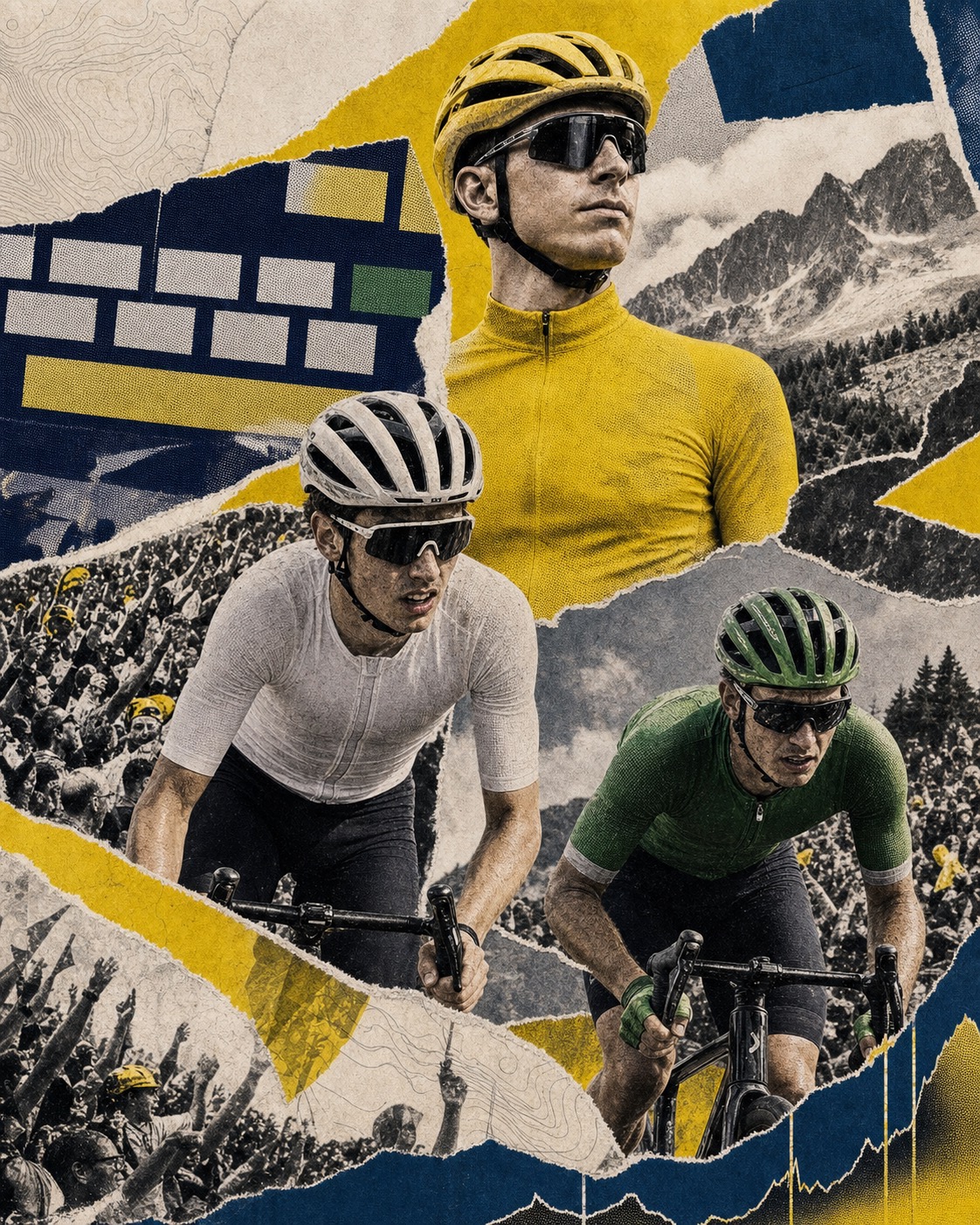
Stage 15 now looks like a direct test of who can still resist
Sunday's Stage 15 from Champagnole to Plateau de Solaison is another mountain day, another chance for Pogačar to press his advantage, and another high-altitude examination for everyone behind him. Vingegaard still has the clearest claim to be the only rider who can disturb yellow, but Seixas now rides into the next stage with the sharper emotional lift. Evenepoel and Ayuso, meanwhile, have lost the luxury of treating the French teenager as a promising outsider.
Le Markstein did not produce the chaos some contenders needed. It produced hierarchy. Pogačar won again, the Tour bent a little further around him, and the battle behind him grew more interesting precisely because the top of the race looks less open than ever.
Sources
- Official Tour de France Stage 14 route and timing page
- Official Tour de France live race center
- Official Tour de France Stage 14 reaction from Tadej Pogačar
- Official Tour de France Stage 14 videos hub
- Official Tour de France Stage 15 route page
- The Guardian Stage 14 live coverage
- The Guardian Stage 14 race report
- Reuters report via Boursorama
- Cycling Weekly standings after Stage 14